

4 – 11 January 2026
by Sergei Davidis
Source: Facebook
4 January 2026
I have no sympathy or compassion whatsoever for Maduro or the Venezuelan dictatorship. On the contrary, I can’t help but be glad that Venezuela is rid of its dictator.
But the situation is obviously more complicated than that and for me raises more questions than answers.
In the information sphere, the mainly simple reactions are predictably notable.
Some are decrying the violation of international law and the interference in domestic affairs, castigating the double standard.
Others unequivocably welcome the removal of the Venezuelan dictator and point to even more suitable objects for such operations.
As usual, I think the situation is more complicated than that.
On one hand, the lament about double standards coming from the mouth of apologists of Russian aggression against Ukraine is blatantly preposterous. It is not for those who justify the perfidious full-scale attack on another country for the purpose of overthrowing a democratically elected regime, an attack that over the course of four years has seen the murder of thousands of civilians and other war crimes, to welcome the annexation of foreign territories and decry a targeted attack that brought only the seizure and removal of a dictator. Maduro’s regime took the country into poverty, his ‘elections’ were clearly falsified, and one quarter of the population has emigrated. The regime has responded to mass protests with repressions and retribution, the number of opponents of the Madura regime killed alone is in the dozens.
Another point is that while, of course, I am no specialist in international law, and I hope to read an analysis by such specialists, for now I absolutely do not understand how an American special operation could meet the requirements and restrictions of international law. Maybe I’m missing something, but it is not obvious to me how the UN Charter and other international agreements could sanction the United States’ actions.
Over the last few decades the system of international law, in which the UN plays a key role, has demonstrated a mounting degradation and inability to ensure the fulfilment of its requirements. What kind of mechanisms of assurance that UN requirements of international law will be met can we talk about when those mechanisms assume compulsion toward peace not on the basis of an independent court’s decision but on the basis of a Security Council vote? The absurd ineffectiveness of this model was especially obvious after the attack on Ukraine by Russia, which has a veto on that Council, but even before, its members were frequently guided, obviously, not by legal considerations but by considerations of political expediency.
In the absence of any effective mechanism for enforcing the requirements of international law, the question inevitably arises about the difference between good and evil, legal and illegal, the question, ‘who are the judges?’ I understand that many are unconcerned by this question and believe that whatever they agree with is the truth and no further proof is needed. But minimal reflexion leads to an understanding of the danger of this path.
We know about the illegitimacy of Maduro or Putin, about their violations of human rights, and so on, but they and their agents are going to say the opposite and accuse their critics with the same confidence. In the absence of a body empowered to resolve this dispute, the very notion of the possibility of establishing the truth collapses (and dictatorships work systematically to achieve this), and might makes right.
It’s unlikely, after all, that anyone is going to argue that Trump overthrew Maduro now because he cares particularly about the observance of democratic norms and human rights standards in Venezuela, let alone international law. He did it because might makes right. And one can only be glad that this time might and right coincided, or so it seems to me, with the interests of democracy and human rights. But the dissimilarity between Donald Trump and a white knight for democracy and law makes me doubt that even his next decisions about the use of force, for example, against Panama or Greenland, will be equally successful. And what is there to say about the fact that might makes right can end up on the side not only of the leader of the most powerful democracy but also, for example, on the side of the chairman of the People’s Republic of China? Basically, this scurrilous and demagogical rhetoric is what Putin is using to justify his own aggression.
And then again, given the obvious failure of the mechanisms for observing the norms of international law, which dictators exploit in their own dictatorial interests without any qualms, it probably would be wrong to demand that democracy artificially limit itself in its struggle against the provocations of dictatorships to these nonfunctioning mechanisms. It’s hard to argue with the fact that the good needs fists. It’s unfortunate, but there are no grounds whatsoever for counting on the fists of good being bigger and more decisive than the fists of evil.
What’s to be done about this, I myself, unfortunately, don’t know.
Source: Facebook
6 January 2026
I am seeing delirious news headlines and ridiculous comments concerning the prospect of Leonid Volkov’s Lithuanian residence permit being taken away.
To a significant degree, I do not share the positions expressed by Volkov, and his message itself, which has become public knowledge, its modality and tonality, seem highly inappropriate to me.
But I’ve been living in Lithuania for almost four years and am grateful for and respectful of the positions of Lithuanian society and the Lithuanian state regarding Putin’s aggression against Ukraine and with respect to Russian opponents of the war and the dictatorship. And out of this respect and appreciation, I don’t think that the prospects for Volkov being stripped of his Lithuanian residence permit are real. No matter what you think of what he has said in private communications, in no way does it present a threat to the national security of Lithuania, an attack on the sovereignty of Ukraine, or especially, support for the aggression.
Russians’ criticism of specific Ukrainian political and state figures might be inappropriate in a war situation (and, in my view, they are), but this inappropriateness, of course, must not be grounds for repressions. And I’m almost certain it won’t.
Source: Facebook
8 January 2026
The saga of nominating candidates for the Platform for cooperation between PACE and Russian democratic forces has ended.
Now, in late January, PACE must choose, from the nominated candidates, 12 people who will constitute this Platform for the coming year.
Simplifying just a little, I will say that I am seeing two main reactions to this process on social networks. One is from those who were nominated or self-nominated and are talking about themselves in this connection. The other, inexplicably much more widespread, condemns the whole construction and its mechanisms and generally calls for a plague on all our houses. I think that the high-profile public scandals that accompanied the process played a considerable role in the formation of the latter position.
I still think that the inevitable scandals should not take away from the essence of the matter. Although PACE is indeed a powerless and not very influential body in general, and the Platform does not assume authorities of any kind and, of course, is not an alternative national delegation, the creation of this body seems important.
This has been stated more than once, but I’ll repeat it. At the moment (and for the foreseeable future), the Platform is going to be the sole formalized channel for interaction between international organizations and Russian civil society. Because of this, the people who join it will to a significant degree be shaping European politicians’—and that means, in large measure, European societies’—perception of what Russian democratic forces are, what the range of their views is, what their interests and desires are, and so on.
Of course, the Platform in PACE will not have a monopoly on communication with the outside world. However, experience and common sense say that politicians and officials for whom divining the fullness and depth of the Russian democratic antiwar movement is not a vitally important goal will follow the path of least resistance and, after the official channel appears, will look to that.
So the Platform is both a potential access channel for antiwar democratic Russians to the ‘European ear’ and a kind of ‘representation’ for these Russians by which, to a significant degree, people will judge them in the future.
Therefore, I think it is very important that the Platform’s makeup be, within the context of the opportunities available, maximally broad and not be reduced to a previously defined array of people, especially an array of people who don’t actually enjoy broad confidence and public support so much as they are converting social and financial capital accumulated over the decades into a media presence.
Understandably, you aren’t going to squeeze all the diversity of antiwar democratic Russians, even those located outside Russia, into 12 people, but one would like the Platform’s makeup to reflect the robust complexity of Russian antiwar democratic forces. So that it includes not only, or more correctly, not so many of those who label themselves ‘politicians’ (in my opinion, there are no Russian politicians now really, there are public figures), but also representatives of civil society: human rights activists, grassroots initiatives, and horizontal associations.
People often say that the optimal way to shape the Platform would be elections, but as a member of the old testament KSO [Russian Opposition Coordination Council] and chair of the election commission in its second contingent I have major doubts on this score. As there is no taxation without representation, so, too, I don’t think full-fledged representation can be achieved without taxation and coercive mechanisms and without specific mutual obligations between representatives and represented. And then there is the exceptionally difficult and I’m not sure even soluble problem of voter registration. One can only welcome such attempts in the future, but for now these are definitely dreams.
In particular, due to the above, the Platform in any case is not representative of antiwar democratic Russians in the literal sense, in the sense of a formal mandate or authorities to speak in their name, and so on.
After some hesitation, I myself decided not to seek a seat in the Platform for several reasons.
First, I have lobbied hard for the maximally broad representation of civil society in the Platform. For me, this is a question of principle, not personal interest, so it did not seem quite right for me to seek such representation myself.
Second, I think that, considering the very limited number of seats, it would be wrong to compete with worthier candidates from the human rights community.
And third, the idea of the Platform in PACE, long discussed, was implemented rather suddenly, and without preparing, it would be far from simple to spend one month in the year on this work rather than on organizing support for political prisoners.
I think that representation of this kind if important, so I think I will return to this question in a year, if by that time PACE, the Russian democratic forces, and the Platform of their interaction are all alive.
Source: Facebook
10 January 2026
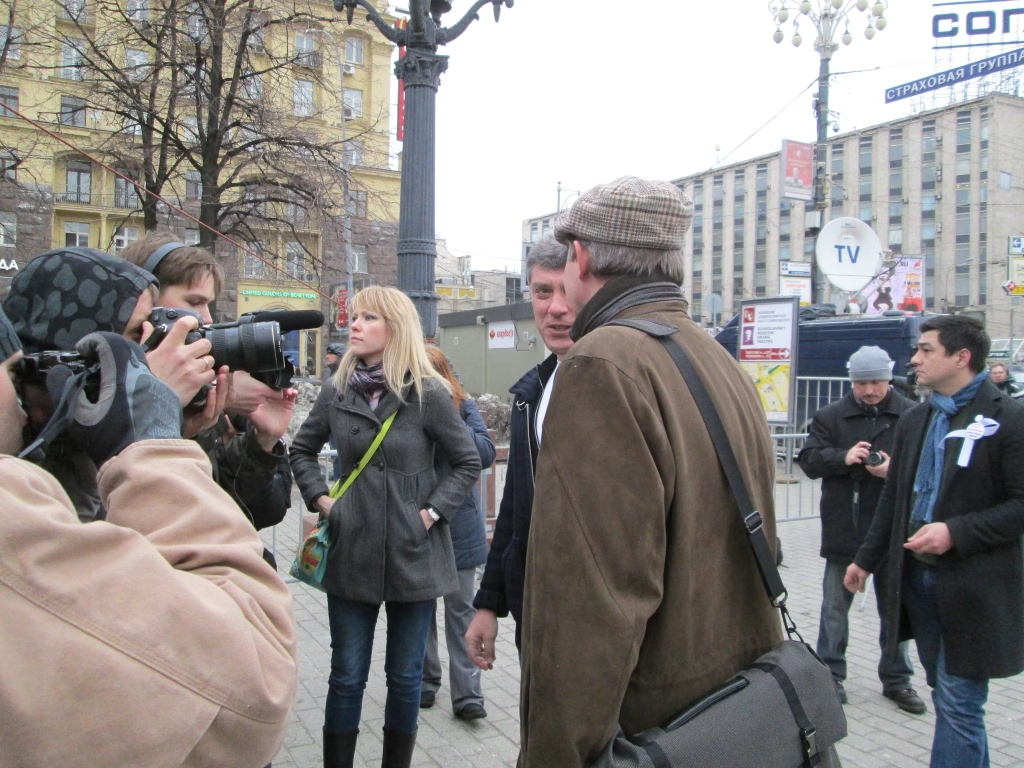
Recalling years past.
Source: Facebook
10 January 2026
I’ve just been told that my public statements on social media are influencing some people’s attitude toward Support for Political Prisoners. Memorial, the project I have the honor to direct.
To be honest, I thought that the fact that I have always striven to formulate a balanced position and have tried to be guided by common sense, resting on unconditional values, on human rights above all, that this should if not exclude then minimize the likelihood of my position being perceived as biassed or one-sided.
But since, nonetheless, someone thinks my position is prejudice and, based on other than rational grounds, partial when it comes to any of the many participants in the many conflicts in the sphere of antiwar democratic Russians, I will state yet again:
All my statements on social networks, unless otherwise stipulated, are an expression of my own personal point of view and in no way reflect the position of our project and in no way define the nature of its activity.
Source: Facebook
11 January 2026
It’s not very often that I have occasion to write something personal about Russia’s war against Ukraine. This war’s criminality is too obvious for words to add anything to this obvious fact.
But the 1418 days of this war, a duration equal to the time from 22 June 1941 to 9 May 1945, is occasion to write about the obvious, although this time our country is on the side of evil.
For me, nothing has changed in principle in these nearly four years. I have no doubts whatsoever as to who in this war is the aggressor and who is the victim of aggression, whose cause is righteous and whose isn’t. My support is unconditionally for the victim of aggression. I wish Ukraine victories and peace on the very best possible terms.
If Ukrainians are not surrendering to exhaustion and despair and are successfully continuing their heroic struggle, especially, we, as outside observers, cannot ‘grow tired of war’. To say nothing of the ridiculousness of the position of those who are overly upset and insulted by certain anonymous Ukrainians on the Internet, possibly even Ukrainian officials, calling them a bad word. Truth and justice cannot depend on that.
Right now, after the barbaric strikes on Ukraine’s energy grid, Ukrainian cities are freezing. Millions of people are without heating, electricity, and water in 15 degrees below zero. Now is the time to express support for Ukraine and Ukrainians by practical actions, to support them materially. There are many options. One of them is here.
Source: Facebook
Translated by Marian Schwartz


